


Can Gang Milling on a Horizontal Milling Machine Lower Part Costs?
Yes—gang milling on a horizontal milling machine can lower cost per part when several compatible surfaces can be machined in one pass and production volume justifies the tooling and setup investment. The strongest candidates are repeat orders with stable dimensions, accessible features, and workpieces rigid enough to withstand several cutters working together.
The financial benefit comes from reducing total production effort: fewer passes, less handling, and fewer repeated setups. A shorter cutting cycle alone does not guarantee savings. Extra tool maintenance, difficult adjustments, or increased scrap can consume the apparent advantage.
Where the savings actually come from
Gang milling mounts multiple cutters on a common arbor, with spacers positioning them to machine different features during the same table movement. Depending on the arrangement, the cutters may produce parallel slots, shoulders, or combinations of accessible surfaces.
Consider a component with two parallel slots that would otherwise require separate passes. A suitable gang arrangement can cut both during one feed movement. If the existing process also requires repositioning the workpiece, combining operations may eliminate handling and another opportunity for locating error.
However, savings depend on the starting process. Replacing several manual setups offers a different opportunity from replacing an efficient CNC operation that already machines everything in one clamping. Compare the proposed arrangement with your actual production route, including loading, inspection, and tool changes.
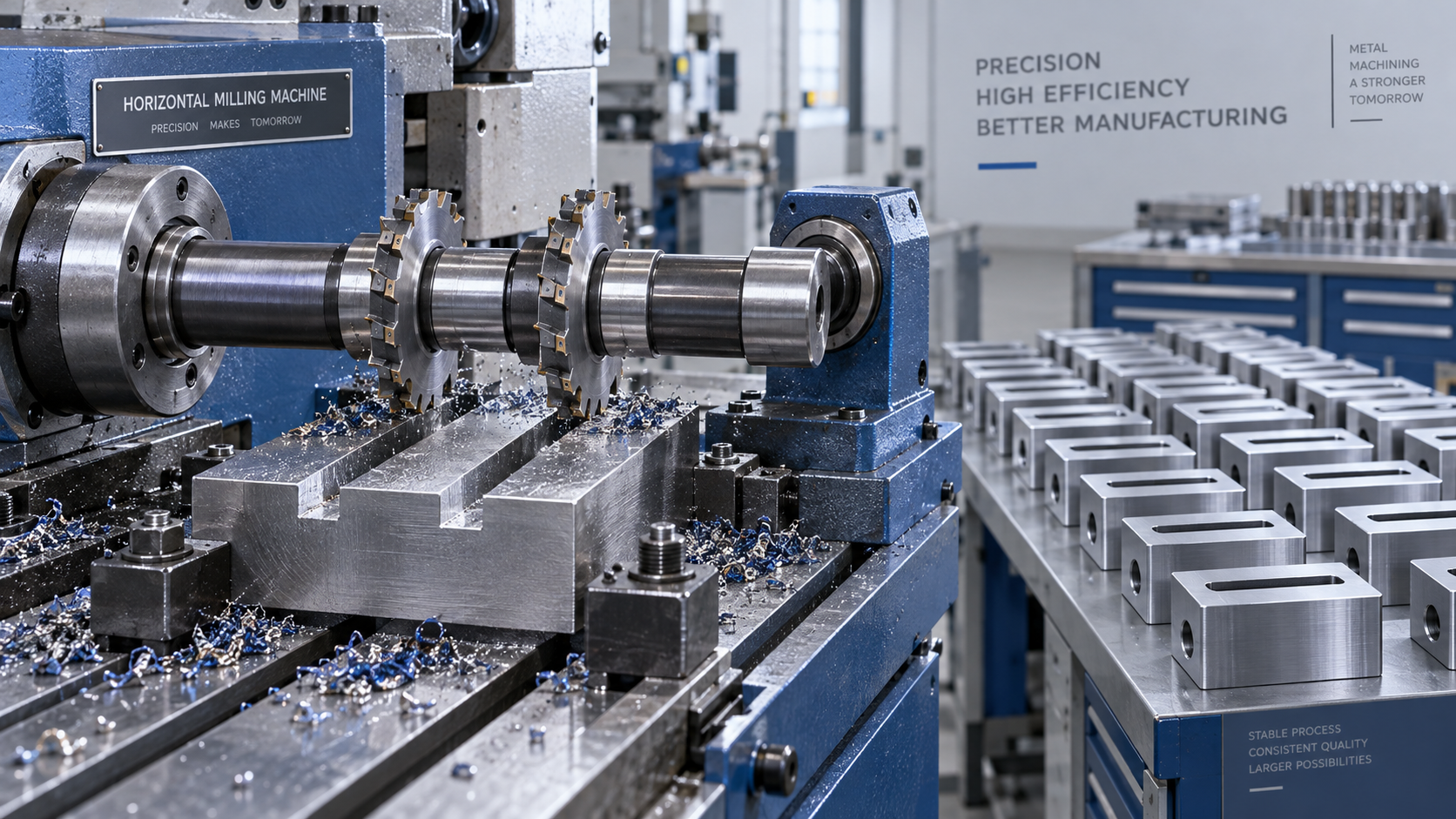
Machining related features from one setup can improve their positional consistency because they share the same workpiece location. Their accuracy still depends on cutter runout, spacer dimensions, arbor deflection, and fixture stability. Combining operations removes some sources of error while making the complete tooling assembly more influential.
Which parts justify a dedicated cutter arrangement?
Look for recurring parts with features that share a practical cutting direction and can be reached without interference. Blocks, brackets, and similar components with repeated parallel features may be suitable, provided the drawing and workholding allow simultaneous engagement.
Compatible cutting conditions matter as much as geometry. All cutters on the arbor rotate at the same spindle speed. Different cutter diameters therefore operate at different peripheral speeds. A combination that looks convenient on the drawing may require compromises in speed, feed, or cutter selection.
The process also needs a workable balance of cutting loads. If one cutter removes substantially more material than the others, it may determine the feed rate for the entire assembly. Several cutters do not automatically deliver a proportional increase in output.
Thin walls, weak clamping areas, interrupted surfaces, and variable stock allowances deserve particular attention. Combined cutting forces can cause vibration or movement that would be manageable during separate, lighter operations. Some parts still need a separate finishing pass to achieve the required dimensions or surface finish.
Frequent design revisions weaken the business case. Changing feature spacing may require rebuilding the cutter stack, adjusting the fixture, and approving the first piece again. A flexible machining process can remain more economical for small batches with changing specifications.
Calculate cost per accepted part
A useful comparison includes the full route from loading a blank to producing an accepted component. Apply the same costing assumptions to the existing and proposed processes.
Cost per accepted part = total relevant production cost ÷ accepted parts produced.
Relevant costs include setup labor, machine time, operator attention, tooling consumption, inspection, rework, and scrap. Include loading and unloading in cycle time. For the proposed process, also account for the arbor, spacers, fixtures, cutter preparation, and any machine modifications or additional equipment.
Separate recurring savings from the initial investment:
- Recurring savings: reductions in processing, handling, and other operating costs after allowing for additional maintenance and consumables.
- Initial investment: tooling, workholding, process development, installation, and any equipment purchase needed to establish the process.
- Break-even quantity: initial investment divided by the net recurring saving per accepted part, when that saving is positive.
Use realistic demand over the expected life of the part. A favorable calculation based on full utilization becomes less useful if orders are intermittent or the component is approaching redesign.
Distinguish released capacity from cash savings as well. Shortening a cycle can create valuable capacity at a bottleneck, particularly when more saleable work is waiting. It may have little immediate financial effect on an underused machine whose staffing and ownership costs remain unchanged. Avoid counting released machine hours as both reduced expense and additional production revenue unless both effects are achievable.
Check the machine under the combined load
A horizontal spindle does not, by itself, establish suitability for arbor gang milling. Some horizontal machining centers primarily use individual tools and require a different engineering approach from a conventional arbor-equipped horizontal mill.
For a horizontal milling machine intended for gang milling, examine spindle torque at the proposed operating speed, arbor diameter, support arrangement, available travel, and fixture clearance. The machine must carry the simultaneous cutting load while maintaining the required dimensions.
Arbor stiffness deserves close attention. A long cutter stack or excessive unsupported length can increase deflection and vibration. Proper support helps, but its position must remain compatible with the workpiece, fixture, and cutter access. Rated motor power alone cannot demonstrate that the complete arrangement will work.
Workholding must resist the combined forces without distorting the component. Cutter rotation and feed direction also affect how those forces act on the fixture. On conventional machines, feed-system condition and backlash influence whether a proposed milling direction is appropriate.
Chip clearance and coolant access should be assessed with every cutter engaged. Chips trapped between cutters or recut at the workpiece can damage surfaces and accelerate wear. A practical demonstration should therefore use the proposed cutter stack and representative stock allowance.
Tool maintenance can change the economics
A gang assembly introduces maintenance interactions that a cycle-time estimate may overlook. One worn or damaged cutter can interrupt the entire operation. Replacing or regrinding it may require checking the assembled dimensions and approving another first piece.
Cutter diameter changes can affect cutting depth and the relationship between machined surfaces. Spacer condition, seating cleanliness, and assembly repeatability also influence the time needed to restore production.
Ask how the supplier proposes to manage these issues. Useful provisions may include documented assembly dimensions, suitable replacement cutters, a defined inspection routine, or a spare prepared arbor when the production schedule justifies it. Include those provisions in the investment estimate rather than treating them as later operating details.
Make the supplier demonstrate the production case
A quotation should connect the machine, tooling, and fixture to a defined component and production requirement. Send representative drawings, material specifications, stock conditions, tolerances, batch sizes, and annual demand. Identify which features currently require separate operations.
When discussing a proposal with Shandong VEDON Intelligent Equipment Co., Ltd. or another equipment supplier, request an explanation of the complete process and the responsibilities for machine performance, tooling, workholding, and service.
The most useful acceptance discussion covers:
- Total cycle time, including handling and routine checks.
- Critical dimensions and surface finish with all cutters engaged.
- Adjustment time after cutter replacement or regrinding.
- Tooling availability, maintenance requirements, and changeover procedure.
- Expected operation across the normal range of incoming stock.
Use these results to compare three practical choices: adapting an existing machine, purchasing dedicated capacity, or retaining a more flexible machining route. Gang milling earns the investment when repeat demand, compatible features, and a stable process produce a lower cost per accepted part. Before committing capital, establish that result with a representative component and a complete operating-cost comparison.

Vedon
Typically replies within minutes
Any questions related to Home?

William / CEO / Brand Founder

Elaine / Sales Manager

Jaye / Sales Director