Common Vertical Milling Center Buying Mistakes
Buying a vertical milling center can become an expensive mistake when the evaluation focuses on the wrong factors. For technical evaluators and procurement teams, the biggest risks usually come from choosing by price alone, overlooking actual machining requirements, and underestimating after-sales support, machine rigidity, and long-term operating cost. The safest approach is to assess the machine as a production asset rather than a catalog item: capacity, accuracy, reliability, serviceability, and fit for your workflow matter far more than the initial quote.
Why Buyers Make the Wrong Vertical Milling Center Decision
When companies search for common vertical milling center buying mistakes, they are usually not looking for generic advice. They want to avoid a bad investment, reduce technical risk, and make sure the machine will perform in real production. This is especially true in general machinery manufacturing, where downtime, tolerance issues, and poor process matching can quickly erase any savings from a low purchase price.
The most common problem is that teams evaluate the machine in isolation instead of in the context of parts, materials, output targets, operator skill, and maintenance capability. A vertical milling center may look competitive on paper, but if it cannot maintain stability under the intended cutting conditions, or if service response is slow, the true cost becomes much higher over time.
Focusing Too Much on Purchase Price and Not Enough on Total Cost
One of the most frequent buying mistakes is selecting the lowest-priced option without analyzing total cost of ownership. The initial machine price is only one part of the investment. Buyers should also account for tooling consumption, maintenance frequency, spare parts availability, energy use, training needs, setup efficiency, and expected downtime.
For procurement teams, this means the cheapest machine is not always the most economical choice. For technical evaluators, the real question is whether the machine can sustain stable machining performance over time. If a machine has weaker structural rigidity, inconsistent spindle behavior, or poor thermal stability, production losses can be far more expensive than the difference in purchase price.
A better approach is to compare suppliers using a broader checklist:
- Expected service life under actual workload
- Accuracy retention over time
- Availability of local or remote service support
- Lead time for spare parts
- Ease of maintenance and operator training
- Cycle-time efficiency in target applications
Ignoring the Real Machining Requirements of the Application
Another major mistake is buying a vertical milling center based on general specifications rather than actual production needs. Technical parameters should always be tied to the workpiece, material type, tolerance requirement, drilling or milling depth, batch size, and production rhythm.
For example, some operations require more than general-purpose milling capability. If the job involves steel pipe drilling, buyers need to pay close attention to drilling diameter range, feed stability, torque output, stroke, and concentricity. In these cases, application-oriented equipment can sometimes offer better process reliability than a broadly selected machine that is not optimized for the task.
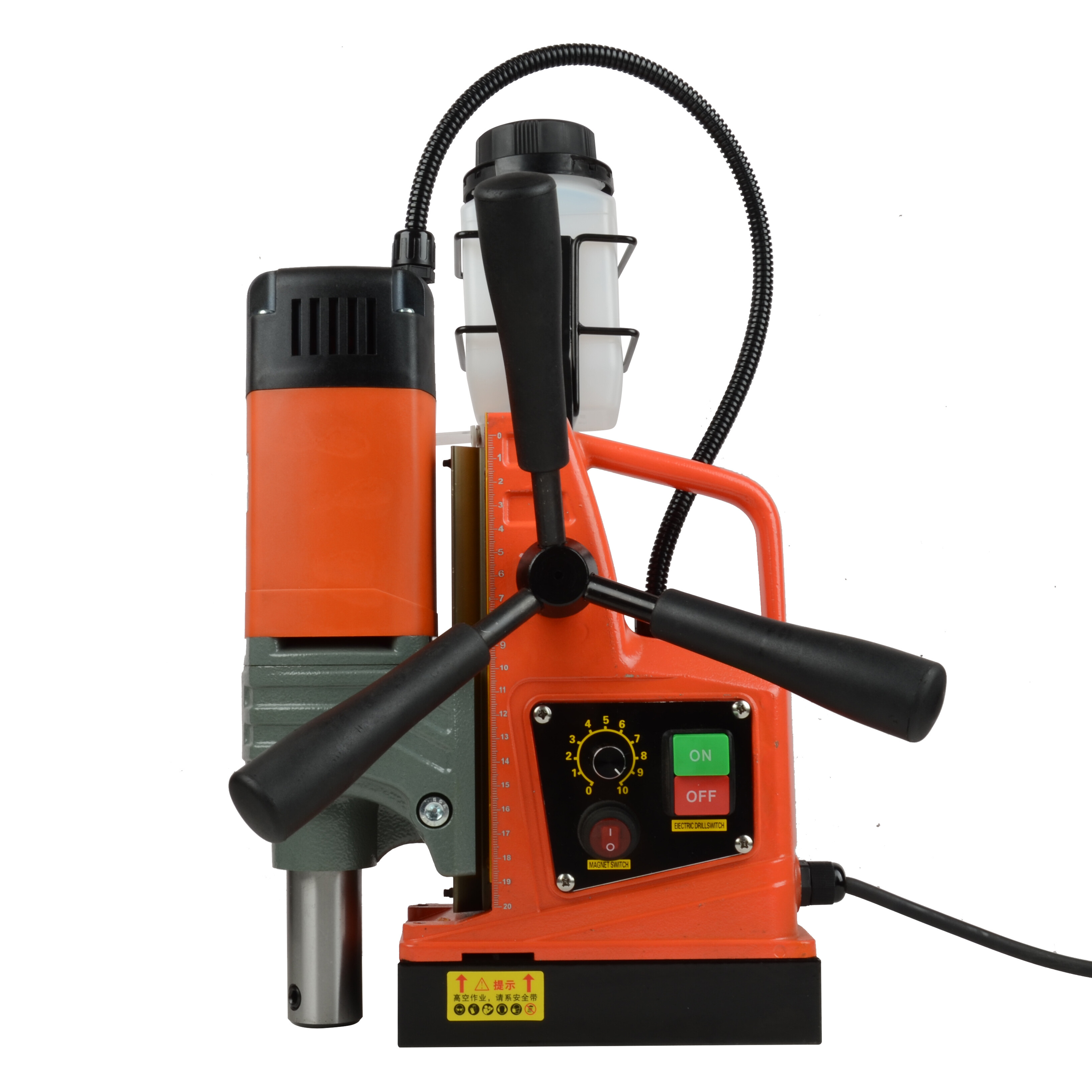
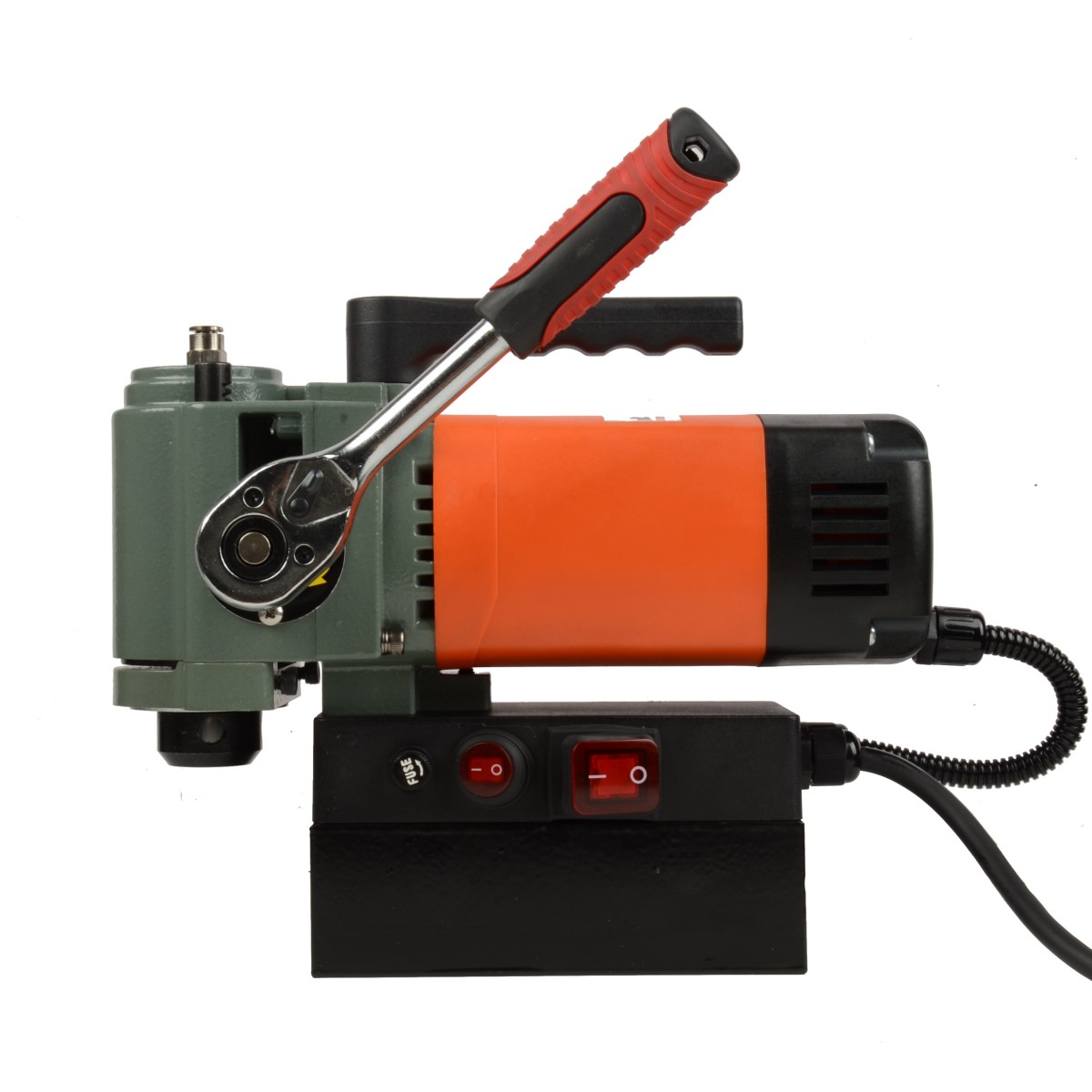
In specialized drilling scenarios, products such as VD1120/ VD2120E may be relevant when buyers need a solution for steel pipe drilling with a pipe diameter range of 165–219mm and a maximum drilling diameter of 120mm. Features such as high torque output, three-stage gear transmission, double dovetail adjustment, and stable concentricity can be more meaningful to production performance than attractive but less relevant brochure claims.
Overlooking Rigidity, Accuracy, and Process Stability
Many buyers pay attention to spindle power and travel, but not enough to machine rigidity, vibration resistance, and structural stability. Yet these factors directly affect surface finish, dimensional consistency, tool life, and repeatability.
In practice, a machine that looks sufficient by specification may still struggle if the base structure, guideway system, or lifting mechanism lacks precision. This is particularly important when the process requires stable hole positioning, minimal wobble, or one-step forming efficiency. If the machine cannot maintain precise motion and alignment during load, production quality will suffer.
Technical evaluators should verify:
- Frame and base construction quality
- Guideway design and wear resistance
- Concentricity performance under real operating conditions
- Transmission stability at low and medium speeds
- Consistency across long production runs
These checks are often more valuable than comparing headline numbers alone.
Assuming All Suppliers Offer the Same Service Capability
After-sales support is often underestimated during procurement, especially when the machine itself appears technically acceptable. However, service quality is one of the strongest predictors of long-term purchasing success. A capable supplier should not only deliver the machine, but also provide application guidance, installation support, troubleshooting assistance, parts support, and ongoing technical communication.
For global buyers, it is important to assess whether the supplier can respond quickly when production problems occur. Delayed service can stop an entire manufacturing line, creating losses far beyond the equipment value.
This is why many industrial buyers now evaluate suppliers not only as manufacturers, but as long-term production partners. Companies with integrated R&D, manufacturing, sales, and service capabilities are often better positioned to support process improvement and reduce technical uncertainty after installation.
Failing to Match the Machine to Operator and Maintenance Reality
A vertical milling center should fit the actual capabilities of the people who will run and maintain it. Some buyers choose equipment with advanced functions they do not fully need, only to find that setup is complex, training takes too long, or maintenance becomes difficult.
Procurement decisions should therefore include practical questions:
- Can operators use the machine efficiently after reasonable training?
- Are daily maintenance tasks straightforward?
- Is the interface or control logic clear enough for the production team?
- Will spare parts and consumables be easy to source?
- Can the machine maintain stable output with the available skill level on site?
If the answer to these questions is unclear, the purchase risk increases. Usability is not a minor issue; it directly influences machine uptime and actual return on investment.
Not Validating Performance with Real Parts or Trial Conditions
Another costly mistake is relying entirely on catalogs, sales presentations, or standard parameter sheets. Before making a final buying decision, technical teams should request sample processing, test reports, or demonstration data based on actual or comparable parts.
This step helps confirm whether the machine can deliver the required result in realistic working conditions. For example, if the intended application involves repeatable drilling on demanding materials, details such as motor stability, stroke control, and lifting precision should be validated rather than assumed. In some cases, equipment built with durable components such as pure alloy copper sliders, aluminum alloy die-cast structures, and precision-machined bases may provide stronger confidence in long-term durability and consistency.
How Procurement and Technical Teams Can Make a Better Buying Decision
The best vertical milling center purchase decisions usually come from joint evaluation. Procurement focuses on supplier reliability, cost structure, and delivery risk, while technical teams validate processing capability, machine stability, and suitability for the job. When these perspectives are combined, the final choice is more balanced and much safer.
A practical evaluation framework includes:
- Define the main workpiece types, materials, tolerances, and production targets
- Identify the machine features that directly affect those applications
- Compare total cost of ownership, not just purchase price
- Review supplier service response, technical support, and parts availability
- Request real processing validation whenever possible
- Check operator usability and maintenance practicality
For buyers with specialized drilling needs, it may also be useful to compare general vertical milling centers with dedicated or application-focused equipment such as VD1120/ VD2120E, especially where high torque, precise lifting, and stable concentricity are directly tied to production quality.
Conclusion
The most common vertical milling center buying mistakes are not usually caused by lack of effort, but by evaluating the wrong things first. Price alone is not enough. A smart decision depends on understanding the application, validating machine stability, assessing long-term service support, and measuring total production value rather than initial cost only.
For technical evaluators and procurement teams, the goal should be simple: choose equipment that fits the real process, reduces operational risk, and supports reliable output over time. When the evaluation is grounded in machining reality instead of surface-level comparison, the investment is far more likely to deliver lasting value.

Vedon
Typically replies within minutes
Any questions related to Home?

William / CEO / Brand Founder

Elaine / Sales Manager

Jessica / Sales Manager