Vertical Machining Center Tool Changer Types and Their Production Impact
Choosing the right tool changer can significantly influence the productivity, flexibility, and lifecycle cost of a Vertical machining center.
For project managers, the practical question is not which changer is technically superior, but which configuration protects throughput, budget, delivery commitments, and future capacity.
Start With the Production Decision, Not the Tool Magazine
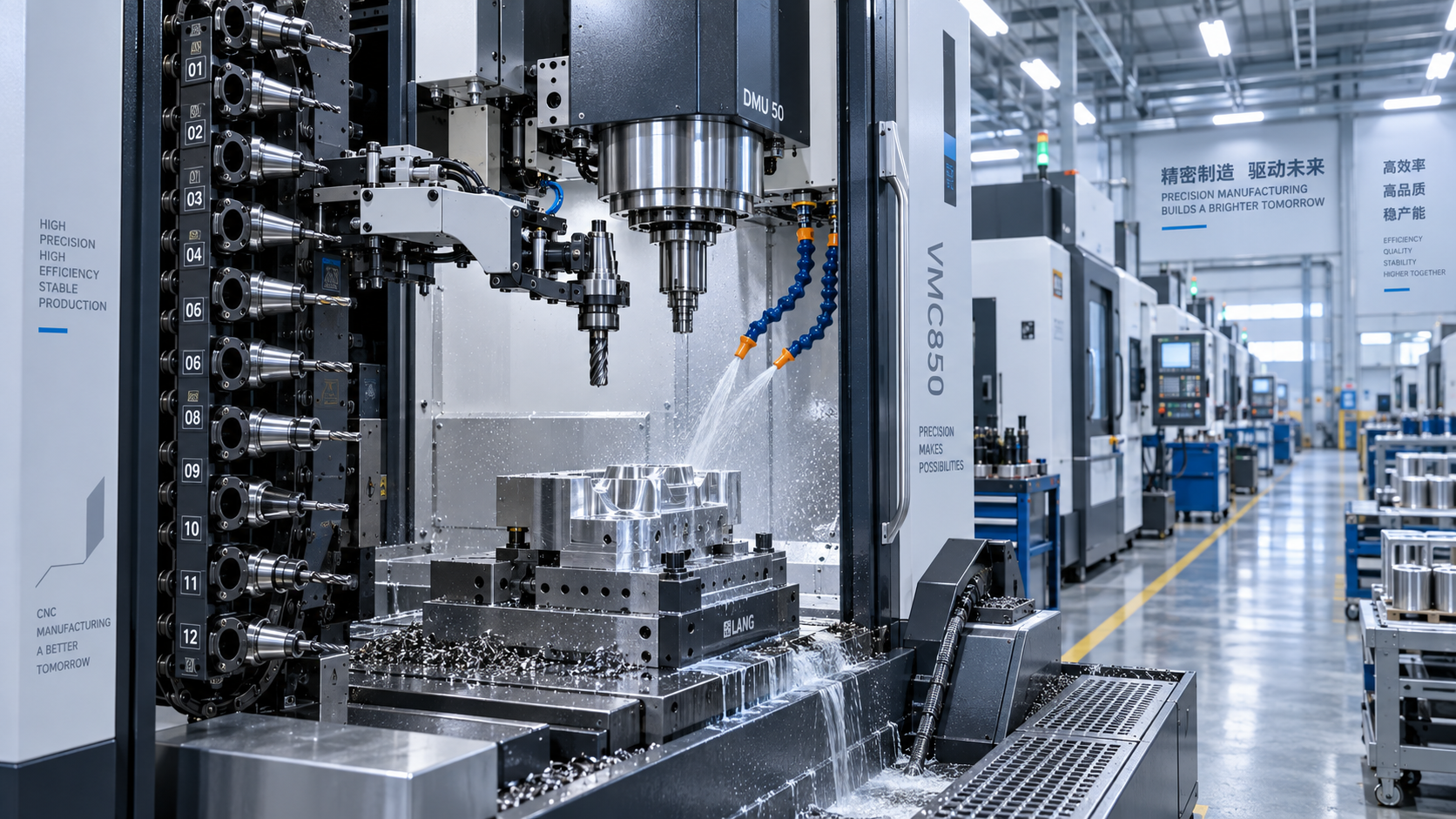
A tool changer should be selected from the production plan backward. Required tool count, change frequency, part mix, uptime targets, and automation plans determine the appropriate design.
Umbrella, arm-type, and chain tool changers each solve different operating problems. Their impact becomes visible in non-cutting time, operator intervention, maintenance exposure, and scheduling confidence.
For low-volume work, a compact changer may offer adequate value. For repeated production, a few seconds lost per tool change can become a measurable annual capacity constraint.
Project leaders should therefore calculate tool changes per cycle, cycles per shift, planned spindle utilization, and the financial impact of delayed parts before approving equipment specifications.
Umbrella Tool Changers: Compact and Economical for Stable Work
An umbrella tool changer places tools in a circular carousel near the spindle. The spindle moves to the selected tool position for each exchange.
This arrangement is usually the most economical option for a Vertical machining center with modest tool capacity requirements and relatively predictable machining programs.
Its principal advantage is simplicity. Fewer moving assemblies can reduce initial investment, simplify commissioning, and make routine inspection more straightforward for plant maintenance teams.
Umbrella systems often suit job shops, prototype departments, education facilities, and production lines machining parts with limited operations and stable tooling requirements.
The limitation is exchange speed. Because spindle movement participates in the changing sequence, tool-to-tool time is normally longer than an arm-type configuration.
That difference may be negligible for long roughing passes. It becomes important when programs contain frequent drilling, tapping, finishing, chamfering, and probing operations.
Managers should also assess access around the carousel. Tool loading, tool identification, chip management, and recovery after an interrupted cycle affect the real operating convenience.
Arm-Type Tool Changers: The Usual Choice for Cycle-Time Control
Arm-type changers use a mechanical swing arm to remove the current tool and install the next tool, often completing both actions in one coordinated motion.
This design usually delivers faster tool-to-tool exchange times than umbrella systems. It is frequently the best balance between investment, speed, reliability, and production flexibility.
For project managers, arm-type performance matters most when parts require many cutters. Saving several seconds across repeated tool changes can release substantial spindle capacity.
Consider a component requiring twelve changes per cycle and produced hundreds of times weekly. Faster exchanges can reduce queue time without adding another machine.
Arm systems are well suited to automotive components, molds, fixtures, valves, precision housings, and general engineering parts with medium to high program complexity.
They also support more predictable takt-time planning. When change time is stable, engineers can estimate output with greater confidence and set more realistic delivery commitments.
However, the mechanism introduces additional parts requiring disciplined maintenance. Arm alignment, gripper condition, sensors, spindle orientation, and tool retention must be inspected consistently.
A lower purchase price can lose value quickly if a selected machine lacks local service capability, spare-part availability, or a clear preventive maintenance schedule.
Chain Tool Changers: Built for Tool Variety and Production Scalability
Chain tool changers store tools in a larger magazine, typically with dozens of positions. An indexing system presents the selected tool to the transfer mechanism.
The primary value is capacity rather than only speed. A larger magazine allows complex programs to remain loaded without repeated manual setup changes between jobs.
This matters for projects combining milling, drilling, tapping, boring, reaming, engraving, and finishing. Tool availability protects cycle continuity and reduces setup-related mistakes.
Chain systems are particularly useful in flexible manufacturing cells, unattended shifts, mixed-model production, and parts requiring backup tools for wear management or contingency planning.
For example, an operator can load duplicate cutters for critical operations. The control can call a replacement after defined wear limits, helping preserve dimensional consistency.
Where metal drilling is a major operation, tooling strategy also matters. A 35mm drill bit with tungsten carbide construction can support demanding structural applications.
Its 35mm cutting depth and 46 to 50mm diameter range may be relevant for railways, bridges, steel structures, tunnels, oil and gas work, and power infrastructure fabrication.
Chain magazines require more space, more careful tool management, and potentially higher capital expenditure. These tradeoffs are justified when setup flexibility or unattended capacity has measurable value.
Compare Tool Changers Through Production Economics
Tool changer selection should be included in the total cost of ownership model, rather than treated as an isolated machine option or a simple technical comparison.
Begin with annual parts demand and the expected machining route. Identify every tool change, setup change, manual intervention, and likely source of production interruption.
Then estimate lost capacity using the actual hourly burden rate. Include labor, facility overhead, programming support, quality costs, and the cost of late delivery.
An arm-type changer may cost more than an umbrella design, yet its shorter cycle time can generate payback where demand is stable and spindle utilization is high.
A chain magazine may appear excessive for one current part family. It can be the lower-risk option when product variants, unattended operation, or additional processes are expected.
Do not use only nominal tool-change time from brochures. Request cycle demonstrations with representative programs, actual tool sizes, coolant conditions, and realistic tool positions.
Tool selection order can influence magazine indexing time. Discuss tool pocket allocation with the machine supplier and CAM team before accepting promised cycle-time estimates.
Reliability Risks That Affect Project Delivery
Tool changer downtime usually stops the entire machine, making reliability a delivery risk rather than merely a maintenance issue. Recovery time can be longer than expected.
Common causes include damaged pull studs, incorrect tool weight, contaminated toolholders, weak air supply, sensor faults, poor spindle orientation, and overloaded magazine pockets.
Large or heavy tools require special attention. Their dimensions can interfere with adjacent pockets, while excessive mass can accelerate wear in magazine and transfer mechanisms.
Specify maximum tool diameter, length, weight, and adjacent-pocket restrictions early. These limits should match the real cutting package, not only the standard tools initially supplied.
Require a documented recovery process for interrupted changes. Operators should know how to restore machine position, verify tool identity, and avoid damaging the spindle taper.
Reliable production also depends on tool data discipline. Tool life values, offsets, pocket assignments, and replacement procedures need ownership across production, quality, and maintenance teams.
How to Match the Changer to Your Operating Scenario
Choose an umbrella changer when budgets are constrained, tool counts are low, machining cycles are long, and product variation is limited. Simplicity provides its strongest value.
Choose an arm-type changer when cycle-time reduction matters, parts need frequent exchanges, and the operation requires a practical middle ground between cost and throughput.
Choose a chain changer when tool count, product complexity, automation, backup tooling, or future expansion creates a credible need for greater magazine capacity.
For each option, ask whether the machine can support the intended fixture, workpiece envelope, chip evacuation method, probing system, toolholders, and downstream automation interface.
Capacity planning should include expected growth, but it should remain evidence-based. Paying for unused magazine capacity makes little sense without a defined production or automation roadmap.
Shandong VEDON Intelligent Equipment can support this evaluation with CNC machine tools, intelligent manufacturing solutions, precision cutting tools, and service aligned with operating requirements.
Conclusion: Select for the Constraint That Limits Output
The best tool changer is the one that removes the most important production constraint at an acceptable lifecycle cost. Faster is not automatically more profitable.
Umbrella changers fit stable, lower-complexity work. Arm-type systems strengthen cycle-time control, while chain changers create flexibility for complex, automated, or evolving production environments.
Project managers should validate the decision through representative cycle studies, tool capacity analysis, maintenance planning, and realistic return calculations before finalizing a Vertical machining center specification.