


What Does a Vertical Milling Center Cost
How much does a vertical milling center cost, and what factors truly drive the price? For technical evaluators and purchasing teams, the short answer is that pricing can range from entry-level manual or basic CNC configurations to significantly higher investments for machines with tighter tolerances, larger travels, stronger spindle systems, automation, and better long-term support. The real issue is not just the purchase price, but whether the machine’s performance, reliability, and life-cycle cost match your production needs. This article breaks down the major cost drivers so you can compare options more accurately and buy with more confidence.
What is the typical cost range of a vertical milling center?
For most buyers, the first question is straightforward: what budget should be prepared? In practice, the cost of a vertical milling center varies widely depending on whether you are evaluating a conventional mill, a CNC vertical machining center, or a more specialized production-oriented model.
As a broad market reference:
- Basic manual or turret-style vertical milling machines may start in the lower price bands and are usually chosen for lighter-duty machining, maintenance shops, or training purposes.
- Mid-range vertical milling centers with stronger structures and wider machining capability typically fall into a moderate investment range suitable for general metalworking and production tasks.
- High-precision CNC vertical machining centers often cost substantially more because of servo systems, control platforms, spindle performance, enclosure design, tool changers, and automation compatibility.
- Advanced automated cells or high-speed, high-accuracy configurations can move far beyond the standard range once probing, pallet systems, chip management, and integration requirements are added.
For technical evaluators and procurement teams, the most useful approach is not to ask only, “What does the machine cost?” but rather, “What capability level does this price represent?” Two machines may look similar in size, yet differ greatly in rigidity, spindle output, repeatability, software, and service support.
What factors have the biggest impact on price?
The cost of a vertical milling center is mainly determined by a few high-impact categories. Understanding these will help you avoid comparing machines on price alone.
1. Machine size and travel
Larger X, Y, and Z travel usually means a larger structure, heavier casting, wider table, and higher material cost. Machines built for bigger workpieces or broader application flexibility naturally command higher prices.
2. Spindle type and power
Spindle configuration is one of the clearest price drivers. Buyers should look at spindle taper, speed range, power output, and the machine’s ability to maintain stable cutting under load. A machine intended for heavier metal removal or wider material compatibility will usually cost more than a lighter-duty unit.
3. Precision and repeatability
Tighter tolerances require better guideways, ballscrews, assembly quality, inspection standards, and compensation systems. If your parts involve precision metalworking, you are not only paying for movement, but for controlled and repeatable movement over time.
4. CNC control and automation level
A basic setup may cover standard milling tasks, but costs increase when you add advanced CNC systems, automatic tool changers, probing, programmable cycles, networking, and smart manufacturing integration. These features can improve productivity, but only if they align with your process requirements.
5. Machine construction and rigidity
Frame design, casting quality, thermal stability, and vibration resistance all affect machining performance. Heavier, more rigid machines usually deliver better results in demanding applications, but they also cost more to manufacture and transport.
6. Brand, support, and after-sales service
Price often reflects more than hardware. Spare parts availability, commissioning, training, technical response time, and warranty terms all influence real purchasing value. A lower upfront quote can become more expensive if service is slow or parts are difficult to obtain.
Why do two machines with similar specifications sometimes have very different prices?
This is one of the most common procurement challenges. On paper, two machines may list similar spindle speeds, travels, or table sizes, yet still show a major price gap. The reasons usually include:
- Different casting quality and structural stability
- Different component brands for bearings, screws, motors, and control systems
- Different assembly standards and factory quality control
- Different testing procedures before shipment
- Different service packages, training, and warranty scope
- Differences in machine life expectancy under real production loads
In other words, specification sheets do not always show long-term reliability, maintenance frequency, or actual cutting stability. That is why experienced buyers evaluate the machine’s total value, not only the visible configuration list.
What hidden costs should purchasing teams include in the budget?
The machine price is only part of the total investment. A more complete budget should include the following:
- Shipping and installation: especially important for heavier machines or overseas sourcing
- Foundation and site preparation: floor loading, power supply, air supply, and layout adjustments
- Tooling and workholding: vises, fixtures, tool holders, cutters, measuring tools
- Training: operator, programmer, and maintenance staff training
- Maintenance and consumables: lubrication, coolant, filters, belts, wear parts
- Downtime risk: support delays, spare parts lead time, troubleshooting complexity
- Software or integration costs: if connected to broader digital manufacturing systems
This is why a machine with a slightly higher purchase price may actually deliver lower long-term cost if it reduces scrap, downtime, and maintenance interruptions.
How should technical evaluators compare machine value instead of just sticker price?
For technical teams, a good evaluation framework includes both performance and business considerations. The most effective comparison usually answers these questions:
- What materials and part sizes will the machine handle most often?
- What tolerance level is actually required in production?
- Is the machine intended for prototyping, general job work, or continuous batch production?
- How important are changeover speed and operator efficiency?
- What is the expected utilization rate?
- How quickly can service and spare parts be delivered?
- What is the expected total cost over three to five years?
Procurement decisions become much clearer when teams compare suppliers using a structured scoring model. Weighting categories such as machining capability, reliability, service responsiveness, lead time, and operating cost can reveal which option is truly the most economical.
What kind of machine makes sense for general precision metalworking?
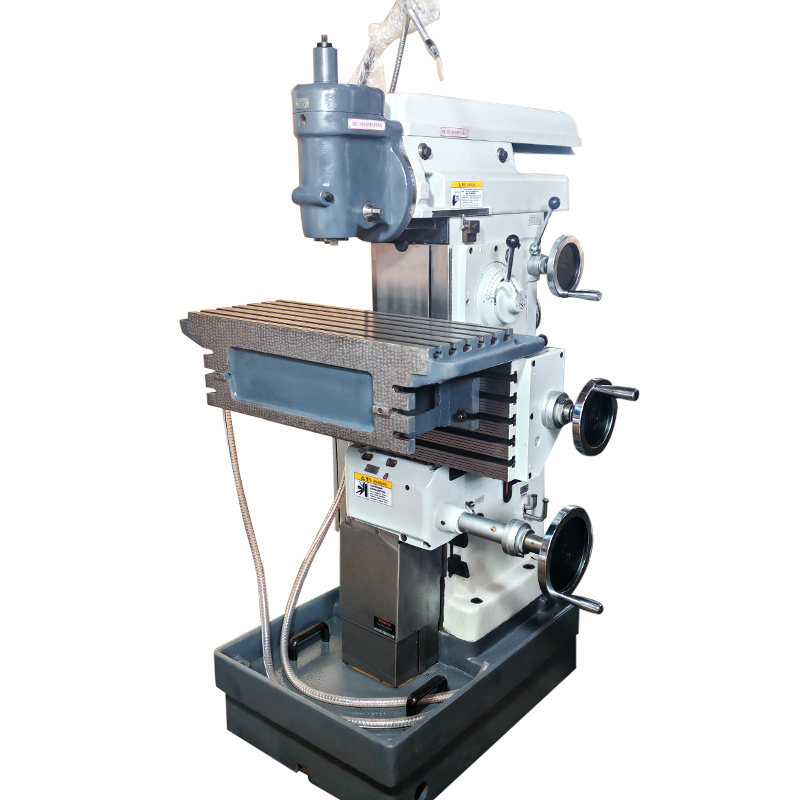
For buyers seeking a practical balance between versatility and investment, a machine designed for precision metalworking with a stable spindle system, adequate table size, and flexible head or table movement can be a strong option. For example, the UM1460 milling machine offers a 1700 × 400 mm work area, ISO 50 spindle configuration, ±45° worktable swivel, and 12-step speed control, making it suitable for a range of general machining tasks where flexibility and solid cutting capability matter.
From a purchasing perspective, machines in this class can be attractive when the application does not require a highly automated machining center but still demands dependable performance, good structural capacity, and adaptability across different workpieces. This can be especially relevant for workshops that need broad process coverage without overinvesting in features that will not be fully used.
When is a higher-priced vertical milling center actually worth it?
A more expensive machine is usually justified when one or more of the following conditions apply:
- Your parts require tighter and more consistent tolerances
- You run longer shifts or high production volumes
- You machine harder materials or perform heavier cuts
- You need faster setups and lower labor dependency
- You want to reduce scrap and improve first-pass yield
- You need integration with digital or automated manufacturing systems
If your operation is low-volume, relatively simple, or less tolerance-sensitive, a mid-range machine may provide better ROI than a premium model. The key is to match the machine to the actual production environment rather than buying to the maximum possible specification.
How can buyers make a smarter final decision?
Before placing an order, ask suppliers for more than a quotation. Request application references, test-cut evidence, inspection standards, included accessories, warranty details, and a clear service response plan. If possible, evaluate machine performance based on your own part requirements.
It is also wise to confirm:
- What is included in the standard configuration versus optional extras?
- Which components are from in-house manufacturing and which are outsourced?
- What acceptance testing is completed before delivery?
- How are installation, commissioning, and training handled?
- What spare parts are stocked, and where?
These details often reveal whether the quoted price reflects a complete solution or only a basic machine body with many later add-ons.
Conclusion
The cost of a vertical milling center can vary dramatically, but the most important takeaway is that price alone does not determine value. For technical evaluators and purchasing teams, the right decision comes from understanding machine capability, precision needs, structural quality, service support, and total life-cycle cost. A lower-priced option may look attractive at first, but if it leads to downtime, unstable accuracy, or poor support, the real cost can be much higher. By comparing machines based on production fit and long-term return, buyers can make a more informed and commercially sound investment.

Vedon
Typically replies within minutes
Any questions related to Home?

Elaine / Sales Director

Jaye / Sales Manager

Jessica / Sales Manager